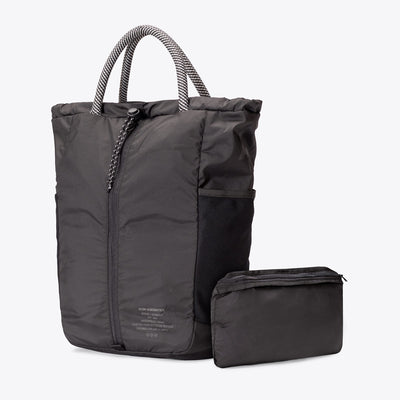
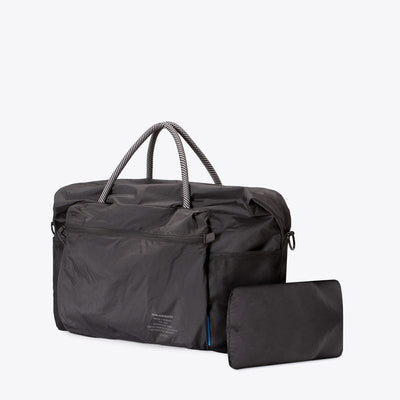
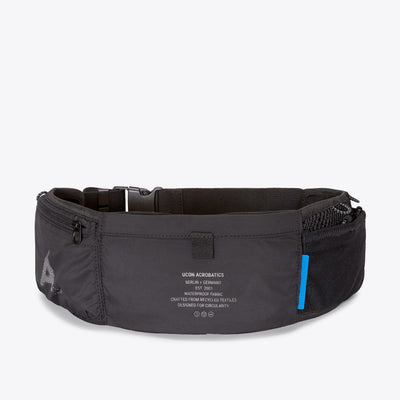
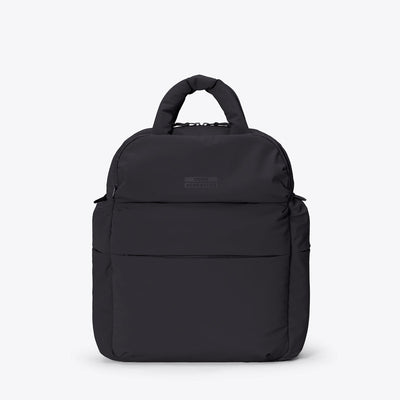

Design begins in Berlin, but producing a bag or backpack depends on specialist manufacturing partners. They cut, sew and assemble every component into the finished product. How we choose these partners, the standards we set and how regularly we work with them are therefore an important part of how we produce.
As of August 2026, we work with six Tier 1 manufacturing partners operating seven facilities in China and Vietnam. Tier 1 refers to the final stage of production, where our backpacks and handbags are cut, sewn and assembled. It does not include the companies further upstream that do the recycing, produce yarns, fabrics, coatings, zips and other components.
Where Our Bags Are Made
Four of our Tier 1 partners are based in Guangdong Province – China's Pearl River Delta, one of the world's leading manufacturing hubs for electronics, textiles and bags. Another partner is located in Fujian Province, while another is based in Vietnam. Together, these regions are recognized globally for producing high-quality bags and backpacks.
We do not publish the names or street addresses of our manufacturing partners. To make our production structure clear without disclosing their identities, the table below shows each partner’s location, number of facilities, length of partnership and visit frequency.
Sewing Partners
|
Our longest current manufacturing relationship has lasted eleven years. Long-term partnerships help create continuity: our teams and manufacturing partners understand the products, the quality requirements and the standards expected in production. A long relationship is not evidence of good working conditions on its own, but it makes regular communication, follow-up and improvement possible.
What Fair Production Conditions Mean to Us
Every manufacturing partner must sign and commit to our ‘Code of Conduct’ for Suppliers. It is based on conventions of the International Labor Organization and defines the labor standards we expect partners to follow.
The code prohibits forced labor, child labor and discrimination. It recognizes freedom of association and the right to collective bargaining, requires legally binding employment relationships and prohibits physical abuse, harassment, intimidation and disciplinary deductions from wages.
Partners are also required to provide a safe and hygienic workplace, address occupation-specific hazards and take effective measures to prevent accidents and reduce health risks.
These are supplier requirements. A signed ‘Code of Conduct’ does not, by itself, prove that every standard is met every day. We therefore combine the code with independent social audits, direct visits and follow-up when improvements are required.
The code also has requirements for pay and working time. Wages and benefits for a standard working week must meet at least the applicable legal or industry minimum and be sufficient to cover workers’ basic needs and provide some discretionary income.
Workers must receive at least one day off in every seven-day period. Regular working hours must not exceed 48 hours per week. Overtime must be voluntary, limited to 12 hours per week, not demanded regularly and paid at a premium rate.
How Our Partners Are Audited
All of our current Tier 1 manufacturing partners have a valid amfori BSCI social audit. These audits are carried out by independent auditing companies, including firms such as Intertek. One partner has additionally been audited through SMETA.
These are social-audit systems rather than product certifications. They examine working conditions and management practices in areas such as remuneration, working hours, occupational health and safety, freedom of association, discrimination, child labor, forced labor and employment practices.
An audit is a structured assessment at a particular point in time, not a guarantee that a facility is without problems. We review the findings with each supplier. Where improvements are required, corrective action plans define the necessary measures and provide a basis for following up on progress.
 What Still Needs to Improve
Although China has become one of the world's leading high-tech manufacturing hubs, working hours remain one of the most challenging issues in parts of its manufacturing industry. Many workers actively seek overtime because it is paid at a premium rate and can significantly increase their income. As a result, factories that offer little or no overtime may find it more difficult to retain workers. At the same time, excessive overtime is considered a non-conformity under the amfori BSCI framework and negatively affects a facility's audit rating.
We believe the long-term goal should be for workers to earn a decent living through regular working hours rather than depending on overtime. Achieving this will require changes across the industry, not only at the factory level but also in purchasing practices and wage development.
This dynamic differs from our production in Vietnam, where workers are paid by working hours rather than by operation, making overtime less central to overall earnings.


Direct Contact Beyond Audits
Independent audits are an important part of our supplier monitoring, but they are only one source of information. Many production improvements start during visits. Being on site makes it easier to understand challenges that are difficult to identify through reports or video calls.
Our co-founder Martin visits every manufacturing partner at least once a year to review production, discuss improvements and spend time with the people who make our products. Over the past ten years, he has spent a total of 335 days at our manufacturing facilities.
Our local quality-control team visits each of our partners in China several times a year. These visits primarily support production and quality control while also providing us with more regular direct contact with the facilities between formal audit cycles. 